
Product

Prismatic Battery Helium Leak Detection Equipment
- Product description
-
- Commodity name: Prismatic Battery Helium Leak Detection Equipment
- Commodity ID: 电池氦检设备
Precision helium leak detection for prismatic, cylindrical, and pouch battery cells to ensure airtight sealing and safety compliance in battery manufacturing processes.
1. Equipment Overview
- Equipment Name: Battery Helium Leak Detection Equipment
- Model: HY-HLD1010
- Application: Precision helium leak detection for prismatic, cylindrical, and pouch battery cells to ensure airtight sealing and safety compliance in battery manufacturing processes.
2. Mechanical Specifications
- Equipment Dimensions:
- Length: 2000 mm
- Width: 1500 mm
- Height: 1800 mm
- Weight: 1200 kg ± 5%
- Frame Material: High-strength steel with anti-corrosion coating.
- Worktable Material: Stainless steel with anti-static properties.
- Test Chamber Size:
- Length: 50–300 mm
- Width: 50–200 mm
- Height: 5–100 mm (adjustable).
3. Detection Specifications
- Detection Method: Helium mass spectrometry.
- Leak Rate Sensitivity:
- Minimum Detectable Rate: 1 × 10⁻⁶ mbar·L/s.
- Maximum Detectable Rate: 1 × 10⁻² mbar·L/s.
- Testing Accuracy: ±0.05 mbar·L/s.
- Helium Injection Pressure: 0.1–0.5 MPa (adjustable).
- Cycle Time:
- Single Cell Test: ≤30 seconds (including evacuation and measurement).
- Batch Test: Configurable based on chamber size.
- Helium Recovery Rate: ≥98%.
4. Control and Interface
- Control System: PLC-based system with integrated HMI for test parameter configuration.
- Interface:
- 12-inch capacitive touchscreen with multi-language support.
- Intuitive graphical user interface (GUI) for real-time monitoring and diagnostics.
- Programmable Parameters:
- Helium injection pressure.
- Leak detection threshold.
- Test cycle time.
- Recipe storage for various battery types and sizes.
- Data Logging:
- Internal Storage: 1 TB SSD for historical test data.
- Export Formats: CSV, PDF via USB, Ethernet, or Wi-Fi.
5. Vacuum System Specifications
- Vacuum Pump Type: Dual-stage rotary vane pump with oil mist eliminator.
- Ultimate Vacuum Level: ≤1 × 10⁻³ mbar.
- Pumping Speed: 50–200 L/min (process-dependent).
- Vacuum Chamber Seal: High-strength silicone gasket with excellent durability.
6. Electrical Specifications
- Power Supply: AC 380V ± 10%, 50/60 Hz, 3-phase.
- Maximum Power Consumption: 6 kW.
- Control Voltage: 24V DC for auxiliary systems.
7. Safety Features
- Emergency Stop: Dual emergency stop buttons on front and rear panels.
- Pressure Monitoring: Real-time helium injection and evacuation pressure sensors with alarms for anomalies.
- Vacuum Chamber Safety:
- Overpressure relief valves.
- Automatic chamber lock during operation.
- Leak Detection Failure Alert: Audible and visual alarm for leaks exceeding preset thresholds.
- Helium Recovery Safety: Continuous monitoring of recovery system to prevent helium loss or contamination.
8. Environment & Installation
- Operating Environment:
- Temperature: 15–30°C
- Humidity: ≤60% RH (non-condensing).
- Noise Level: ≤75 dB during operation.
- Installation Requirements:
- Flat, vibration-free surface.
- Clearance: Minimum 800 mm on all sides.
9. Maintenance and Warranty
- Maintenance Schedule:
- Weekly: Inspect vacuum seals, clean filters, and check helium recovery system.
- Monthly: Calibrate helium sensors and inspect vacuum pump oil levels.
- Quarterly: Comprehensive system calibration and vacuum chamber inspection.
- Warranty Period:
- Standard: 12 months.
- Extended: Up to 36 months available upon request.
Key words:
Series of Products

The Huiyao Laser Cell OCV Testing & Sorting Machine is a critical component for ensuring the quality and consistency of prismatic battery modules. This semi-automatic station is designed to accurately measure the Open Circuit Voltage (OCV), AC Internal Resistance (ACIR), and polarity of individual cells *before* they enter the main assembly line. By sorting cells into precise groups based on these parameters, it guarantees module balancing, safety, and optimal performance.

The Huiyao Laser Pneumatic Stacking & Pressing Machine is a high-precision, semi-automatic station designed for the flexible assembly of prismatic battery modules. It ensures optimal cell compression and alignment during the manual stacking process, which is critical for module durability, performance, and safety. This unit is ideal for R&D, prototyping, and small-batch production environments where process flexibility and precise pressure control are paramount.
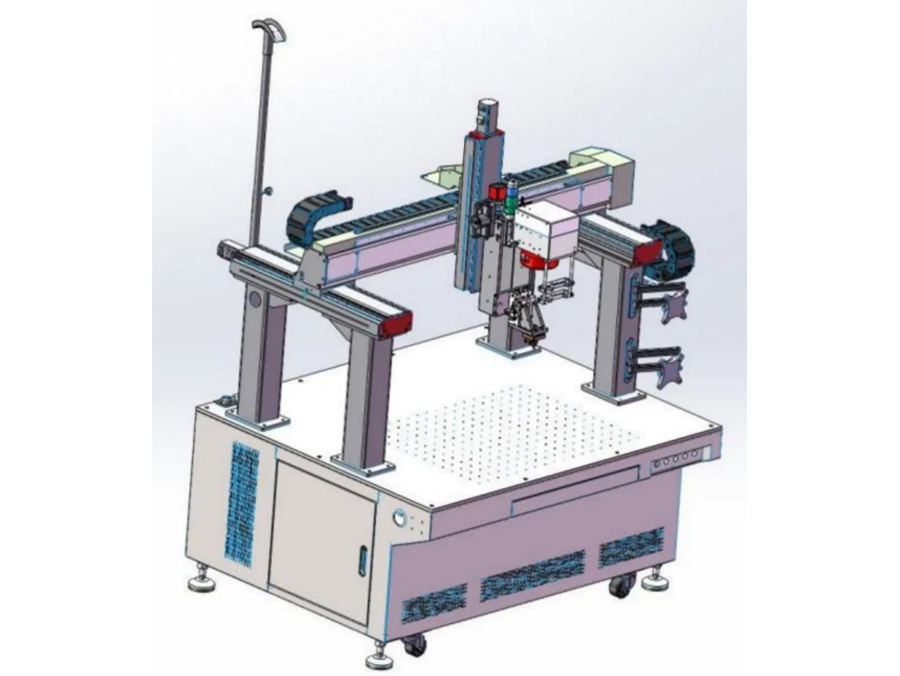
Huiyao Laser is a leading battery laser welding machine manufacturer offering professional battery pack and battery module welding solutions for many fields, such as energy storage systems of research and development machines, as well as complete assembly lines for module and battery pack production.
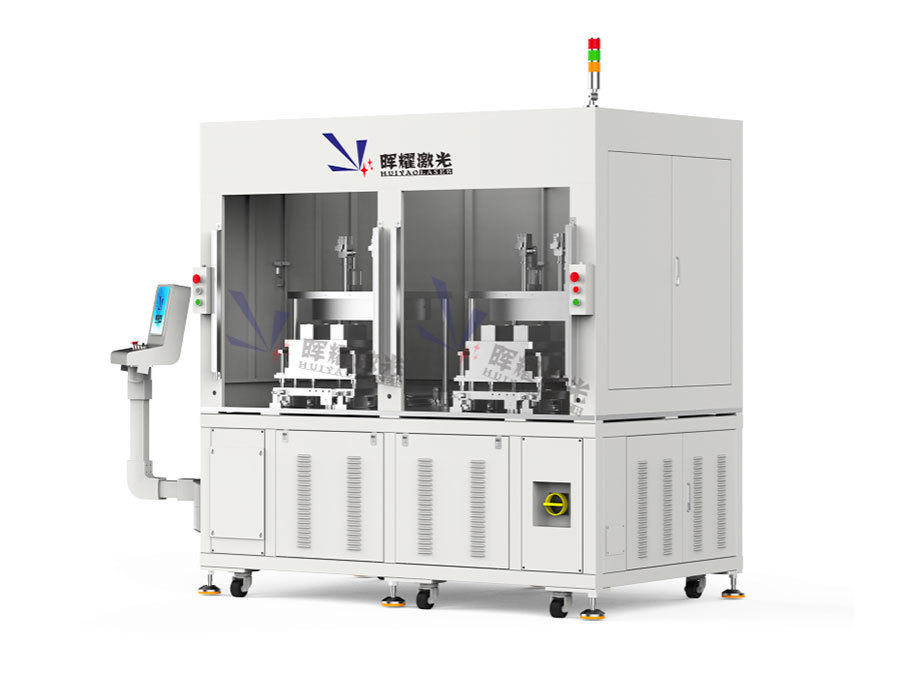
Battery Top Cap Welding Equipment
Precise welding of top caps onto battery cases, ensuring airtight sealing and electrical connectivity for prismatic and pouch batteries.
Get a Free Quote
PLEASE LEAVE YOUR MESSAGE AND WE WILL CONTACT YOU AS SOON AS WE RECEIVE IT!
FAQ
Q
Can these lines handle different prismatic cell sizes or chemistries (LFP, M3P)?
A
Q
How do I choose the "best" prismatic assembly line?
A