
Solution

EV Prismatic Battery CTP Automatic Welding Line
- Product description
-
- Commodity name: EV Prismatic Battery CTP Automatic Welding Line
- Commodity ID: 动力电池CTP自动焊接线
The EV Prismatic Battery CTP (Cell-to-Pack) Automatic Welding Line is a high-performance.
1. Equipment Overview
The EV Prismatic Battery CTP (Cell-to-Pack) Automatic Welding Line is a high-performance, fully automated production line for assembling prismatic cells directly into battery packs without using traditional modules. The system integrates advanced welding technologies, precision handling, and quality inspection processes to ensure structural integrity and electrical performance. Designed for large-scale EV battery manufacturing, it enables efficient, scalable, and cost-effective production.
2. Key Processes and Modules
2.1 Automatic Cell Feeding and Positioning Station
- Function: Automatically feeds and positions prismatic cells for alignment and welding.
- Specifications:
- Cell Size Compatibility: 120–300 mm (height), 50–200 mm (width), 20–100 mm (thickness).
- Positioning Accuracy: ±0.2 mm.
- Cycle Time: ≤5 seconds per cell.
2.2 Cell-to-Busbar Welding Station
- Function: Welds the terminals of prismatic cells to the pack's busbars.
- Specifications:
- Welding Method: Fiber laser.
- Welding Power: 3000-4000 W (adjustable).
- Welding Speed: ≤5 seconds per weld.
- Welding Accuracy: ±0.05 mm.
- Quality Control: Real-time weld monitoring with automatic defect detection.
2.3 Cooling Plate Integration and TIM Application Station
- Function: Installs cooling plates and applies thermal interface material (TIM) for heat dissipation.
- Specifications:
- TIM Application Accuracy: ±0.1 mm.
- Cooling Plate Types: Liquid or air-cooled aluminum plates.
- Cycle Time: ≤20 seconds per assembly.
2.4 Structural Bonding and Fastening Station
- Function: Bonds and fastens cells and supporting structures to enhance mechanical stability.
- Specifications:
- Adhesive Type: High-strength epoxy or UV-curable adhesive.
- Bonding Accuracy: ±0.2 mm.
- Fastening Type: Automated torque-controlled screws.
2.5 High-Voltage Connector and Harness Assembly Station
- Function: Assembles and connects high-voltage terminals, connectors, and harnesses for the battery pack.
- Specifications:
- Voltage Range: ≤1,000V DC.
- Assembly Accuracy: ±0.3 mm.
- Cycle Time: ≤30 seconds per connection.
2.6 Final Welding and Sealing Station
- Function: Performs final welding of pack enclosures and seals for protection against environmental factors.
- Specifications:
- Welding Type: Laser seam welding.
- Sealing Material: Silicone or polymer-based gasket.
- Weld Accuracy: ±0.1 mm.
2.7 Electrical Testing and Quality Inspection Station
- Function: Tests the electrical integrity, insulation, and performance of the assembled battery pack.
- Specifications:
- Test Parameters: Voltage, internal resistance, insulation resistance, and leakage current.
- Testing Speed: ≤3 minutes per PACK.
3. Production Line Specifications
- Overall Dimensions:
- Length: 80,000 mm.
- Width: 12,000 mm.
- Height: 4,000 mm.
- Weight: Approximately 50,000 kg.
- Production Capacity: 10–15 PACKs/hour.
- Automation Level: Fully automated with robotic systems and AI-driven quality control.
4. Vision and Quality Inspection Systems
- Alignment Cameras:
- Resolution: 8 MP industrial cameras.
- Alignment Accuracy: ±0.05 mm.
- Defect Detection: AI-based system for surface, weld, and assembly defect detection.
- Data Management: All inspection results stored in a centralized database with traceability.
5. Control and Interface
- Control System: Distributed PLC system with centralized supervision.
- Human-Machine Interface (HMI):
- 10-inch touchscreen interface with multi-language support.
- Real-time monitoring and diagnostic tools.
- IoT Integration: Remote monitoring, predictive maintenance, and cloud data storage for production analytics.
6. Safety Features
- Enclosure Design: Fully enclosed with interlocked safety doors and barriers.
- Emergency Stop System: Strategically placed for operator safety.
- Laser Safety: Class 1 laser enclosures with safety interlocks.
- Electrical Safety: Overcurrent and surge protection included.
7. Electrical Specifications
- Power Supply: AC 380V ±10%, 50/60 Hz, 3-phase.
- Maximum Power Consumption: 200 kW.
- Control Voltage: 24V DC for auxiliary systems.
8. Cooling System
- Type: Centralized water cooling system for welding and high-power equipment.
- Cooling Capacity: 10 kW.
- Flow Rate: 30–60 L/min.
9. Environmental Requirements
- Operating Environment:
- Temperature: 15–30°C.
- Humidity: ≤60% RH (non-condensing).
- Noise Level: ≤75 dB during operation.
- Installation Space: Minimum clearance of 2,000 mm around the line.
10. Maintenance and Warranty
- Maintenance Schedule:
- Weekly: Inspect alignment, welding, and cooling systems.
- Monthly: Calibrate vision systems and test stations.
- Quarterly: Comprehensive diagnostics and software updates.
- Warranty Period:
- Standard: 12 months.
- Extended: Available upon request.
11. Technical Specifications
Technical Parameter
Specification
Engineering Value
Laser Source Power
6000W
Deep-penetration welding for chassis-integrated CTP.
Pack Assembly Speed
10 PPM (Packs Per Minute)
Optimized for large-format CTP/CTC mass production.
Axis Positioning
± 0.1 mm Accuracy
Critical for aligning long-span busbars across cells.
Thermal Management
Inline TIM Dispensing
Automated application of thermal interface materials.
Working Area (X/Y/Z)
Customizable (e.g., 2.5m x 2m)
Scalable for various EV chassis platforms.
Key words:
Series of Products

The Huiyao Laser Cell OCV Testing & Sorting Machine is a critical component for ensuring the quality and consistency of prismatic battery modules. This semi-automatic station is designed to accurately measure the Open Circuit Voltage (OCV), AC Internal Resistance (ACIR), and polarity of individual cells *before* they enter the main assembly line. By sorting cells into precise groups based on these parameters, it guarantees module balancing, safety, and optimal performance.

The Huiyao Laser Pneumatic Stacking & Pressing Machine is a high-precision, semi-automatic station designed for the flexible assembly of prismatic battery modules. It ensures optimal cell compression and alignment during the manual stacking process, which is critical for module durability, performance, and safety. This unit is ideal for R&D, prototyping, and small-batch production environments where process flexibility and precise pressure control are paramount.
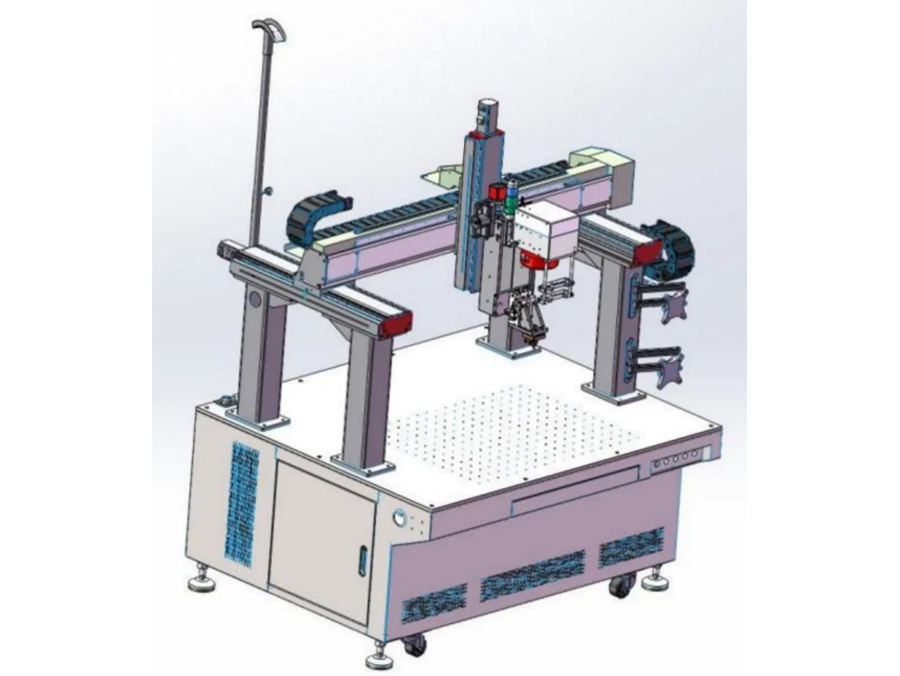
Huiyao Laser is a leading battery laser welding machine manufacturer offering professional battery pack and battery module welding solutions for many fields, such as energy storage systems of research and development machines, as well as complete assembly lines for module and battery pack production.
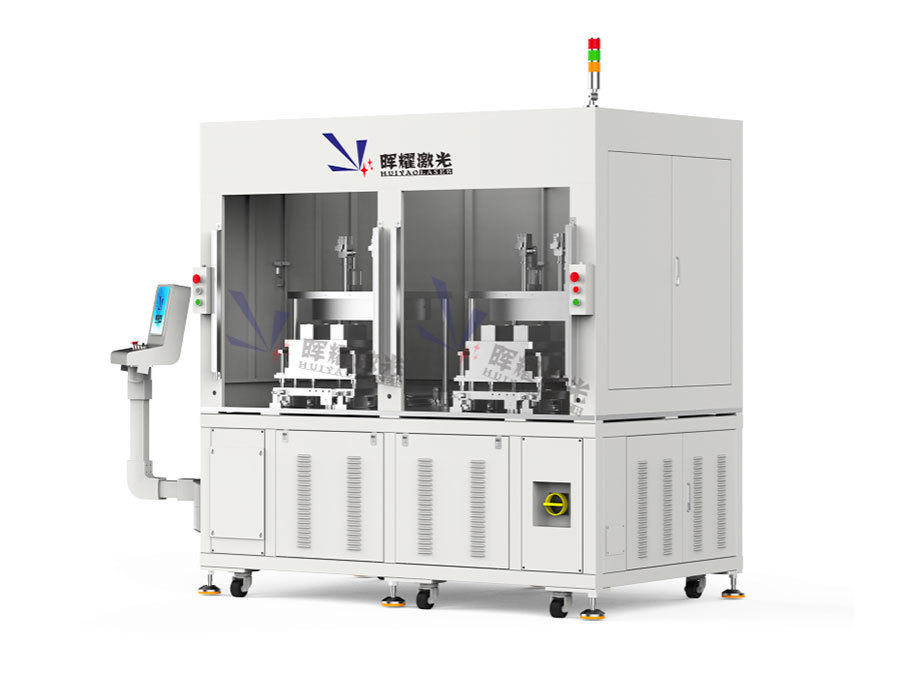
Battery Top Cap Welding Equipment
Precise welding of top caps onto battery cases, ensuring airtight sealing and electrical connectivity for prismatic and pouch batteries.
Get a Free Quote
PLEASE LEAVE YOUR MESSAGE AND WE WILL CONTACT YOU AS SOON AS WE RECEIVE IT!
FAQ
Q
Can these lines handle different prismatic cell sizes or chemistries (LFP, M3P)?
A
Q
How do I choose the "best" prismatic assembly line?
A